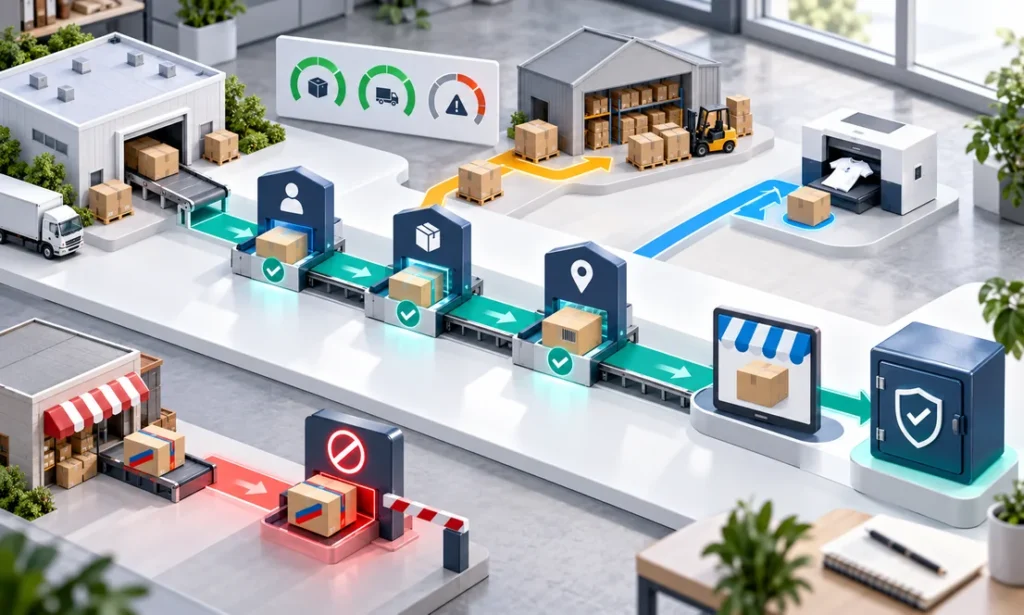
Can you sell on Amazon without inventory? Yes, and people do it every day. But the version sold in most YouTube videos, where you buy from another store when an order comes in and have it shipped to your customer, is exactly what gets seller accounts restricted. If you want to sell on Amazon without inventory, the real question is which model you’re choosing and who controls the customer experience when you never touch the product. Here’s how I walk new sellers through it, one question at a time.
Is dropshipping even allowed on Amazon?
Yes, with conditions. Amazon’s drop shipping policy lets you use a supplier that ships on your behalf, but you must be the seller of record. Your name has to appear as the seller on packing slips, invoices, and external packaging, and anything identifying the third-party supplier has to be removed before the order ships.
What’s explicitly not allowed: buying the product from another online retailer and having that retailer ship straight to your customer when the package shows their name or their packing slip. Amazon says that can lead to restrictions on your ability to sell through merchant fulfillment. In practice, that means a customer receiving a box from a big-box retailer with your Amazon order inside is a fast way to lose the channel.
Does “without inventory” mean “without money”?
No. You skip the upfront purchase of stock, but the rest of the cost structure still applies: your selling plan, referral fees by category, fulfillment fees if you use FBA, advertising to get visibility, and the time it takes to build listings that convert. Fee amounts change, so always check them against Amazon’s official selling fees before you set a price.
What you do reduce is the risk of being stuck with product that doesn’t sell. That’s the genuine advantage, and it’s worth building around.
Isn’t FBA already “no inventory”?
Not quite. With Fulfillment by Amazon you still own inventory; it just sits in Amazon’s warehouses instead of your garage. You buy the product, send it in, and Amazon stores, packs, ships, and handles returns. If your real worry is storage and packing, FBA solves it. If your worry is buying product at all, FBA isn’t the model. Our FBA guide for beginners covers how it works, and FBA vs FBM compares it with shipping orders yourself.
In my experience, a lot of people searching “without inventory” actually mean “without a warehouse”. If that’s you, starting FBA with small test batches is usually the healthiest path.
Which models actually work without holding stock?
- Print on demand. Amazon’s own programs let you upload designs or manuscripts, and the product is printed only when it sells: Kindle Direct Publishing for books and journals, and Merch on Demand for apparel, which requires applying for access.
- Dropshipping from a manufacturer or distributor. A supplier that already holds the stock, agrees in writing to ship under your name with no branding of their own, and can meet Amazon’s shipping times.
- Selling stock your business already has. If you run a store or a distribution business, Amazon can be a new channel for inventory you already own, with no additional purchase.
What rarely works: generic products that dozens of other sellers list from the same supplier. You end up competing on price alone, and your supplier can sell to anyone.
What breaks most “no inventory” sellers?
Performance metrics. When you or your supplier fulfill orders, Amazon tracks whether you ship on time, provide valid tracking, and avoid cancellations. If your supplier runs out or ships late, the metric that drops is yours, not theirs. Before listing anything, ask your supplier three questions: how many units they have on hand, how fast they dispatch, and what happens when an item goes out of stock. Get the answers in writing.
What about selling into Mexico without inventory?
It’s a common question from US brands looking at Amazon.com.mx. The same seller-of-record rule applies, and cross-border adds import, tax, and delivery-time considerations that make pure dropshipping harder, not easier. For most brands, the practical path is shipping a small batch into Mexican FBA once a product proves demand. We break down the options in selling on Amazon Mexico as a US brand.
So how should you start?
- Decide what “without inventory” means for you: no upfront purchase, or no storage? The answer picks the model.
- Find a supplier willing to stay invisible and to commit to dispatch times in writing.
- Run your numbers with real category fees before setting a price.
- Launch a handful of products and watch shipping performance closely for the first weeks.
- Move winners to FBA in small batches once demand is proven; it usually improves visibility and removes the day-to-day supplier risk.
FAQ
Can you get banned for dropshipping on Amazon?
Dropshipping itself is allowed. Buying from another retailer and having them ship to your customer under their name violates Amazon’s policy and can lead to restrictions on your account.
Do I need a business to sell on Amazon without inventory?
You can register as an individual or a business, depending on your plan and tax setup. Talk to your accountant about the structure that fits your situation.
Want to build an Amazon operation that doesn’t put your account at risk? Our Amazon account management team helps with setup, listings, and supplier structure. Or book a call and we’ll review your case in 30 minutes.
Finding this analysis useful?
Get one email a week with the most important developments in AI and business technology — explained in plain English, with real numbers and zero spam.
Want this working in your business?
Book a free 30-minute session: we look at your case and tell you what is worth doing (and what is not) — no strings, no sales pitch.
Book a free session →