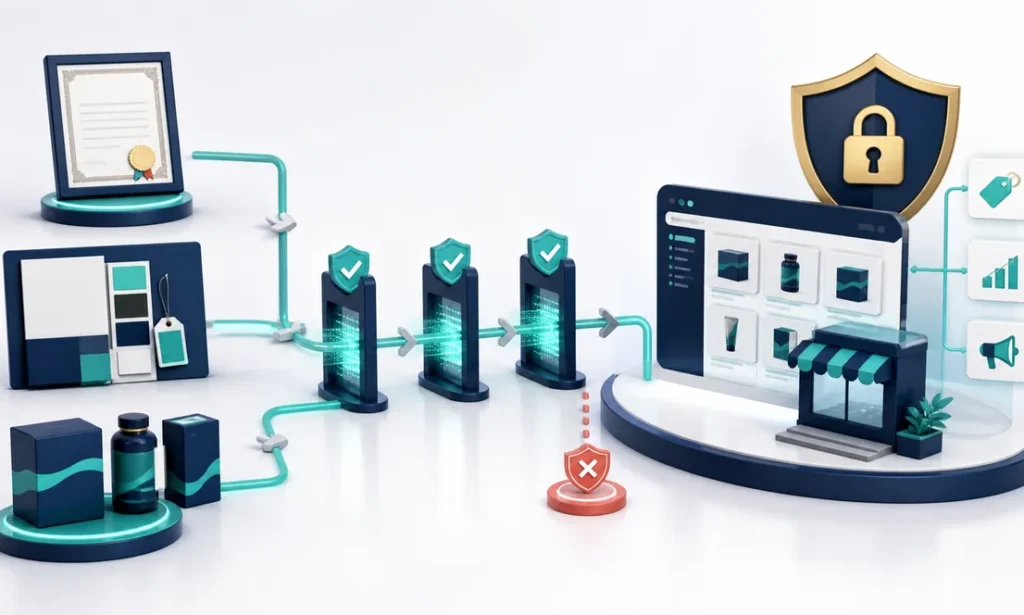
If I could force every new brand I work with to do exactly one thing before spending a dollar on inventory, it would be starting their trademark application. The amazon brand registry requirements are short, but the one that matters, a registered or pending trademark, takes time you cannot compress later. I operate Amazon accounts in the US and Mexico, and the difference between running a brand-registered account and an unregistered one is the difference between owning your listings and renting them. Here is what you need, how enrollment actually goes, and why I call it step one.
Amazon Brand Registry Requirements: The Short List
Stripped of the legalese, here is what enrollment takes:
- A registered or pending trademark. For US-based brands, that means a trademark registered with the USPTO or, in many cases, one with a pending application. Amazon has historically accepted pending applications filed through certain channels, but eligibility details change, so verify the current criteria in the Brand Registry portal before you rely on this.
- A trademark that matches your brand. The name or logo in your trademark filing needs to match the brand name that appears on your products and packaging. Mismatches are one of the most common reasons applications stall.
- The mark physically on your product or packaging. Amazon typically asks for images showing your brand name permanently affixed to the product or its packaging. A sticker slapped on for the photo tends not to survive review.
- An active seller or vendor account. You enroll with the account that will manage the brand, and you can then assign roles to other users or agencies.
That is genuinely the full list. The Amazon Brand Registry requirements are short on paper; the barrier is not complexity but lead time, because trademark offices move at their own pace.
The Enrollment Process, Step by Step
- File the trademark first. Work with a trademark attorney or file directly with the USPTO. Amazon also runs a program that connects sellers with vetted IP law firms, which can be a sensible route if you have no existing counsel. Whatever you do, file early; this is the long pole in the entire timeline.
- Gather your information. Trademark registration or application number, the trademark office it was filed with, your brand name exactly as registered, product images showing the branding, and a list of the categories you sell in.
- Apply inside the Brand Registry portal. The application itself is a form, not an ordeal. Accuracy matters more than speed here.
- Complete verification. Amazon typically sends a verification code through the trademark contact on file, often the attorney who filed your mark, so warn them it is coming. Once the code is returned, approval usually follows.
Timelines vary case by case, so I will not pretend there is a fixed number of days. What I can tell you from doing this repeatedly: applications with clean, matching information sail through, and applications with sloppy mismatches turn into support-ticket archaeology.
Why It’s Step One: What Registry Actually Unlocks
People treat Brand Registry as a defensive tool. It is, but the offensive unlocks are what change your economics:
- A+ content. The visual product-page modules that replace the plain description. This is the single most visible upgrade shoppers notice.
- A Brand Store. Your own multi-page storefront on Amazon, free of competitor ads.
- Stronger authority over your detail pages. Registered brands get more weight in disputes over what the listing says, which matters enormously when resellers or bad actors try to edit your content.
- Brand protection tooling. Search-and-report tools for counterfeits and infringement, plus proactive protections that improve as you report.
- Better data and ad formats. Brand-level analytics and access to ad types reserved for brand owners, like Sponsored Brands.
An honest note, because I promised no hype: Registry is a toolbox, not a force field. Hijackers and counterfeiters do not vanish the day you enroll; you just finally get real tools to fight them. Infringement monitoring is repetitive, checklist-driven work, exactly the kind of process worth systematizing rather than doing by memory, which is the same philosophy behind our business process automation practice: turn recurring manual work into a documented, repeatable system.
Mistakes That Cost Brands Months
- Waiting to file the trademark until after launch. You end up selling unprotected during your most vulnerable phase.
- Brand name mismatches between the trademark, the packaging and the listing.
- Buying dubious shortcut trademarks from sketchy marketplaces. If it sounds too fast to be legitimate, it usually is.
- Enrolling and never using the tools. A+ content, the brand store and the protection reports only pay off if someone actually works them.
Frequently Asked Questions
Is a pending trademark really enough?
It has been for many sellers filing with the USPTO, but this is precisely the kind of policy that shifts. Check the current eligibility rules in the Brand Registry portal before building your launch plan around it.
Does Brand Registry cover Amazon Mexico too?
Brand Registry works across marketplaces, but protections generally follow where your trademark rights exist. If Mexico is on your roadmap, and as someone who operates there, I think it should be, discuss Mexican trademark coverage with your attorney early.
Getting brands enrolled, building their A+ content and putting the protection tools to work is part of the standing checklist in our Amazon account management service, on both sides of the border.
Not sure where your brand stands on eligibility? Schedule a call and we will map out your fastest clean path into Registry.
Keep reading
- Amazon A+ Content Design: Sizes, Modules and What Converts
- Amazon Listing Optimization: What Actually Moves Rankings
- How to Sell on Amazon Mexico: a Guide for US Brands
Would you rather have us run it? See our Amazon account management service.
Finding this analysis useful?
Get one email a week with the most important developments in AI and business technology — explained in plain English, with real numbers and zero spam.
Want this working in your business?
Book a free 30-minute session: we look at your case and tell you what is worth doing (and what is not) — no strings, no sales pitch.
Book a free session →