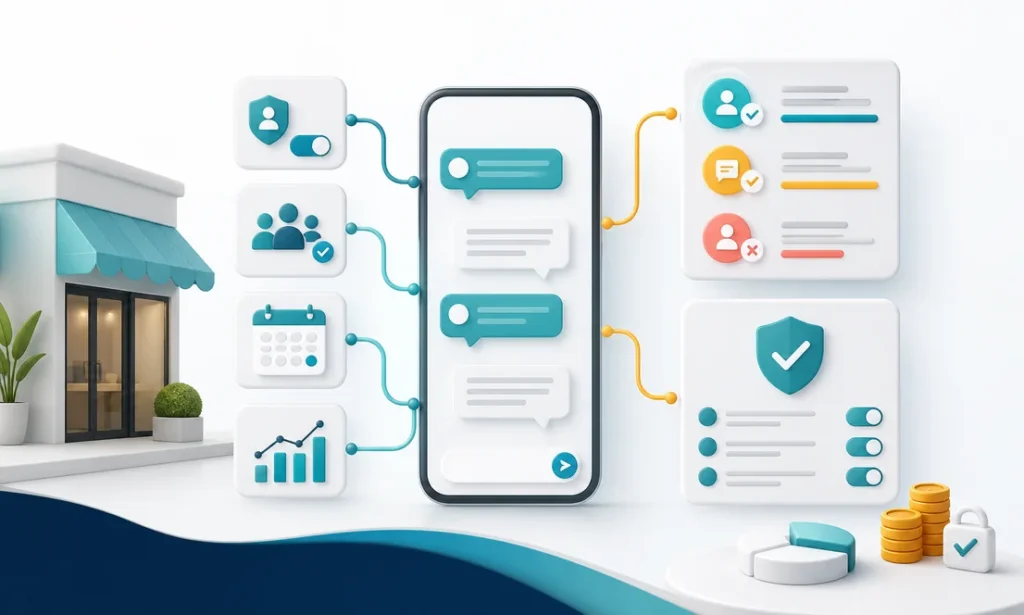
Think about how you treat your own phone. Emails pile up unread for days; a text gets glanced at almost immediately, even from a number you do not recognize. That simple human habit is why text message marketing for small business owners has become such a workhorse for contractors, shops, and local services. It is also why the rules around it are strict: the channel works because people guard it, and the law guards it with them. This guide covers what texting is genuinely good for, what it costs, the consent rules you cannot skip, and how to set it up so it runs itself.
What texting is actually good at (and what it isn’t)
Texting shines at short, timely, useful messages tied to a relationship that already exists: appointment confirmations and reminders, “tech is on the way” updates, review requests after a job, quotes following an inquiry, and the occasional seasonal nudge to past customers. It is poor at cold outreach to strangers, which is both legally risky and, frankly, rude in a channel this personal. A good rule from the kitchen-table school of marketing: if the message would annoy you from your own dentist, do not send it to your customers. One more strength worth naming: texts are two-way. A reminder a customer can reply to with a quick question quietly becomes a service channel, and those small exchanges save appointments that an unread email would have lost. Think of texting as the fast lane reserved for messages people actually want; abuse the lane and they revoke it with one word: STOP.
The rules: consent first, always
I am not your lawyer, and this is not legal advice, but the shape of US texting rules is consistent and worth stating plainly. You need the customer’s prior consent to text them, and marketing messages are held to a stricter standard than transactional ones like appointment reminders. Every marketing text should identify your business and honor opt-outs immediately; reply-STOP handling is standard on reputable platforms. Keep records of how and when each contact opted in. US carriers also require businesses to register their texting numbers, which reputable platforms walk you through. None of this is onerous once set up, and it protects the exact thing that makes the channel valuable: permission. When in doubt, ask for consent in writing at the point of contact, on your forms, at booking, at the counter, and let people leave easily. Lists built on permission perform; lists built on scraping get carriers and regulators involved.
What text message marketing for small business really costs
Honest answer: plans vary widely by platform and volume, so I will not quote you a made-up per-message figure. The structure, though, is consistent: you pay a platform subscription plus usage that scales with message volume, and broader automation suites that bundle texting with other tools commonly run $200-$600 per month per user. For most small operations the cash cost is modest compared to the real cost, which is attention: a badly run list burns goodwill you spent years earning. The better cost question is per outcome: what does a booked appointment or a recovered no-show cost you through this channel versus others? Many owners report texting compares very favorably, precisely because the messages go to people who already know you.
The setup that makes it pay: automation
Texting rewards speed and consistency, and humans are bad at both on busy days. The wins come from wiring texts into your workflow so they fire without anyone remembering:
- Missed-call text-back. Someone calls, you are on a job, they instantly get “Sorry we missed you, how can we help?” Responding in minutes rather than hours dramatically raises close rates, and this single automation is the cheapest way to get there.
- Appointment confirmations and reminders. Fewer no-shows, fewer awkward phone-tag loops.
- Post-job review requests. Sent automatically at the moment satisfaction peaks.
- Quote follow-ups. A polite nudge days after an estimate, which owners almost never send manually.
Wiring these into your booking and job systems is exactly what our business process automation team does, and texting should feed the same scoreboard as the rest of your marketing: tracked responses and booked work, the heart of a data-driven digital marketing setup, not blasts into the void.
When not to bother yet
If you have no customer list, no booking flow, and no one answering inquiries, texting is a faster way to reach people you are not ready to serve. Build the basics first. And if your business runs on a handful of commercial relationships rather than consumer volume, a phone call still beats any campaign.
FAQ
How often should I text customers?
Transactional messages, as needed; marketing messages, sparingly, many owners settle on roughly monthly or seasonal. Watch your opt-out rate: it is the audience telling you the truth.
Can I text my existing customer list?
Having someone’s number is not the same as having consent to market to them. Get an explicit opt-in first; a simple “want appointment reminders and occasional offers by text?” at booking does the job.
Text or email: which should I invest in?
Both, for different jobs: text for time-sensitive and transactional touches, email for longer content and lower-stakes offers. They compound when the same system coordinates them.
Want text message marketing for small business wired into your booking flow the right way, consent, automation, and measurement included? Schedule a free call and we will map it in thirty minutes.
Finding this analysis useful?
Get one email a week with the most important developments in AI and business technology — explained in plain English, with real numbers and zero spam.
Want this working in your business?
Book a free 30-minute session: we look at your case and tell you what is worth doing (and what is not) — no strings, no sales pitch.
Book a free session →